


11 October 2022
The collision shortened the asteroid’s orbit
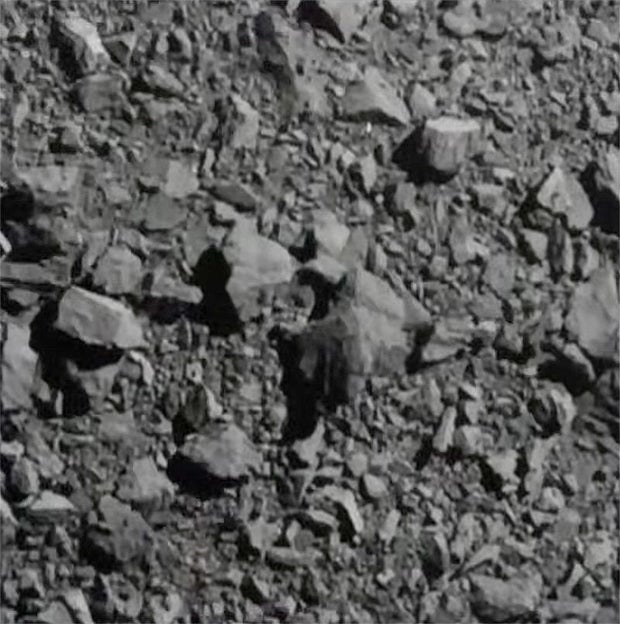
Two weeks after the collision, NASA announced that Dimorphos was taking 32 minutes less to circle Didymos. Its previous circuit had lasted 11 hours and 55 minutes; the initial measurement put the new period at 11 hours and 23 minutes, with an uncertainty of about two minutes. That answered the immediate question left by the impact footage: DART had changed the asteroid’s motion, rather than simply reached its target. The measured change was well above the mission’s minimum success threshold of 73 seconds. Neither asteroid threatened Earth before or after the test.
1 March 2023
The scientific results explained why the push worked
The first result was followed by more detailed analysis. Four papers in Nature examined the targeting, orbital change and material thrown out by the collision. Light-curve observations and radar produced consistent estimates of a 33-minute reduction, with an uncertainty of one minute. The refined figure strengthened the initial finding rather than reversing it. The spacecraft’s collision transferred momentum, while rock blasted from the surface added recoil. DART had demonstrated a way to alter an asteroid’s trajectory; applying that technique to another object would still depend on its properties and sufficient warning time.
19 March 2024
The impact changed the shape as well as the motion
A JPL-led study then reconstructed the aftermath using spacecraft images, radar and changes in reflected sunlight measured from Earth. Its models indicated that Dimorphos had become more elongated and that its previously circular orbit was now slightly eccentric. The refined orbital period was 33 minutes and 15 seconds shorter than before the impact. These were deductions from several sets of observations, rather than a spacecraft’s post-impact inspection of the surface. They showed that the experiment had rearranged the target as well as changed its motion, making its physical response important to future deflection planning.
6 March 2026
The asteroid pair’s journey around the Sun changed too
The next measurement concerned a different orbit. Dimorphos circles Didymos, but the two asteroids also travel together around the Sun. Research published in Science Advances found that DART had changed that shared 770-day orbital period by 0.15 seconds. Observations of stars briefly hidden by the asteroids, combined with radar and other measurements, helped reveal the small effect. Debris escaping the pair carried momentum away, shifting the motion of the system as a whole. The result extended the experiment beyond the shorter local orbit measured in 2022. It did not turn these asteroids into a threat to Earth.
17 March 2026
Hera moved into position for a closer examination
DART’s central test had succeeded, but questions about the target’s physical response remained. ESA reported that Hera had completed a deep-space manoeuvre to line up its approach to the Didymos system later in 2026. Tracking and spacecraft telemetry confirmed the manoeuvre. Hera’s planned close inspection would help scientists understand the aftermath and make future deflection calculations more reliable. That survey was still ahead: the successful course correction was not an arrival or a completed inspection. DART had established that a deliberate impact could change the motion of this target; Hera would investigate what happened to it up close.
The evidence
Sources for this update
Where the story stands
Ending FoundDART’s test has its answer.
DART set out to test whether a spacecraft could strike an asteroid and measurably change its motion. It achieved both: the collision shortened Dimorphos’s orbit around Didymos by about 33 minutes, and subsequent research confirmed the deflection. That gives this experiment a clear outcome. The result is evidence for asteroid defence, rather than a guarantee against every possible threat. A target’s structure and the time available to act still matter. Hera’s closer examination builds on the completed test; it does not leave DART’s central question unanswered.