


2 March 2022
The UN demanded a withdrawal. The war continued.
The UN General Assembly voted 141–5, with 35 abstentions, to demand that Russia end its invasion and withdraw its forces. It was a clear diplomatic rejection of the attack, not an enforced end to the fighting.
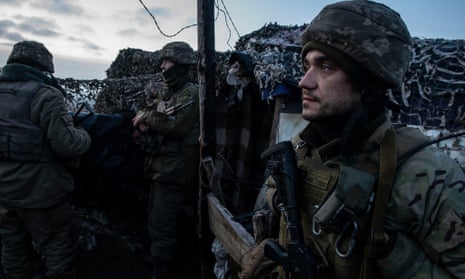
Russia’s full-scale assault had opened fronts across Ukraine. The first news reports could describe the attacks and the flight of civilians, but could not tell readers where this would end. The General Assembly’s demand established an international position while the outcome on the ground remained unsettled.
June 2023
A rapid invasion became a prolonged war
Russia withdrew from the Kyiv area in 2022. Ukraine later recovered territory around Kharkiv and the city of Kherson. Those were important reversals for the invasion, but they did not end it.
The next year brought a Ukrainian counteroffensive and continuing fighting in the south and east. Reuters’ second-anniversary account described limited results from the offensive that began in June 2023. The direction of the fighting changed; a final settlement did not follow. The survival of the Ukrainian government was not the same outcome as the recovery of all occupied territory.
Reuters archive · The first two years of war · NATO · December 2023 review of Ukraine’s territorial recoveries
6 September 2024
The damage spread through everyday life
By September 2024, UN human-rights monitors were reporting extensive civilian harm from Russian attacks that began on 26 August. Energy facilities across numerous regions had been damaged.
A damaged power system affects more than a line on a military map. Homes, services and the ability to get through the coming winter were part of the war’s consequences. The UN’s report documented civilian deaths and injuries alongside the infrastructure damage, making clear why an account of the aftermath cannot be reduced to territory alone.
UN Human Rights · Damage to civilian life and energy services, September 2024
15 August 2025
Talks did not produce a settled peace
Donald Trump and Vladimir Putin met in Alaska to discuss a resolution, followed by talks involving Volodymyr Zelenskyy and European leaders in Washington. The Commons Library records further peace proposals and negotiations later in the year.
Those meetings were diplomatic developments, not evidence that Ukraine had accepted a final settlement or that the war had ended. Their place in this timeline is the gap between efforts to negotiate an outcome and an outcome that has actually taken effect.
House of Commons Library · Timeline of the invasion and later diplomacy
23 February 2026
The reconstruction bill reached almost US$588 billion
A joint assessment by Ukraine’s government, the World Bank, the European Commission and the UN estimated almost US$588 billion in recovery and reconstruction needs over the following decade. Its cut-off was 31 December 2025.
The estimate is not money already spent or a bill already paid. It includes the work needed to restore housing, transport, energy and other systems. The assessment said 14% of housing had been damaged or destroyed, affecting more than three million households. Recovery work was already taking place, even as further destruction continued.
World Bank, Ukraine, EU and UN · Reconstruction assessment, 23 February 2026
15 October 2026
The latest verified civilian figures still rose
The UN’s September report recorded at least 328 civilians killed and 2,105 injured during that month. Across January to September 2026, it recorded 2,570 killed and 15,211 injured—59% more civilian casualties than in the same period of 2025.
These are verified minimums, not a complete total of everyone harmed. The mission says lack of access and independent information limits what it can confirm in occupied areas and Russia. It also reported renewed large-scale attacks on electricity and heating infrastructure. Four years after the original headline, civilian protection and an implemented peace remain unresolved, rather than a completed ending waiting to be announced.
UN Human Rights · September 2026 civilian casualty report, released 15 October · UN Human Rights · September 2026 report, English PDF
The evidence
Sources for this update
- 01UN General Assembly · Withdrawal demand, 2 March 2022
- 02House of Commons Library · Timeline of the invasion and later diplomacy
- 03Reuters archive · The first two years of war
- 04UN Human Rights · Damage to civilian life and energy services, September 2024
- 05World Bank, Ukraine, EU and UN · Reconstruction assessment, 23 February 2026
- 06UN Human Rights · September 2026 civilian casualty report, released 15 October
- 07UN Human Rights · September 2026 report, English PDF
- 08NATO · December 2023 review of Ukraine’s territorial recoveries
Where the story stands
What has changed—and what still needs an answer
This thread remains Still Unfolding because the central outcome—a settled end to the invasion and its immediate threat to civilians—has not been delivered. The latest verified civilian report documents continuing harm. A future ceasefire announcement would be an important stage; its implementation and durability would need to be examined before calling it an ending. This account is a timeline of the invasion’s course and consequences, not a claim to list every battle or every victim.