

14 July 2022
Leaving the country became leaving office
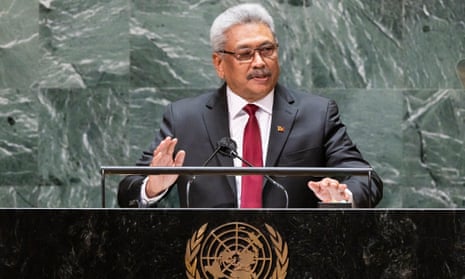
Sri Lanka’s Parliament records Rajapaksa’s resignation as effective from 14 July. The Speaker’s announcement was presented to the House on 16 July.
That separates the departure in the original headline from the constitutional change that followed. A president flying abroad and a presidency becoming vacant are different events; here, the parliamentary record supplies the latter date.
20 July 2022
Parliament chose the next president
MPs elected Ranil Wickremesinghe on 20 July. Parliament’s account records 134 votes for him and confirms that he would serve the remainder of the vacant presidential term.
The presidency therefore did not remain empty. The immediate aftermath moved from crowds and airport reports into a formal succession process, while the economic problems that had driven the crisis still needed answers.
2 September 2022
Rajapaksa returned as a former president
The House of Commons Library’s subsequent chronology records Rajapaksa returning to Sri Lanka on 2 September 2022.
The striking departure was not a permanent exile. By the time he came back, the presidency had already passed to his successor. The dated return establishes that part of his journey; it does not establish his precise present-day whereabouts.
House of Commons Library · return and crisis chronology · November 2022
23 September 2024
Another change at the top followed
A later parliamentary notice records Anura Kumara Dissanayake assuming presidential duties with effect from 23 September 2024, and consequently resigning his parliamentary seat.
The leadership story had moved beyond the emergency succession of 2022. But a different person holding office could not, by itself, settle the original question about economic recovery.
Sri Lanka Parliament · Dissanayake assumed presidential duties · September 2024
27 May 2026
The rescue programme reached a further approved stage
The IMF Board completed the combined fifth and sixth reviews of Sri Lanka’s programme in May 2026. Its release provided immediate access to about US$695 million and put total purchases under the arrangement at about US$2.4 billion.
This was an approved financing stage, rather than simply a promise to negotiate. The same assessment still identified high debt-sustainability risks and unfinished reforms. It was support for recovery, not a declaration that the crisis had left no lasting costs.
4 October 2026
The next financing step still had conditions
On 4 October, IMF staff announced agreement on the seventh review. Access to about US$345 million depended on Executive Board approval, a programme-consistent 2027 Budget and a financing-assurances review.
Reuters and Daily FT reported those conditions. The Fund also described renewed growth alongside risks from external shocks and a need to protect vulnerable people. Its account of an improving economy did not establish that everyone affected by the 2022 crisis had recovered.
IMF · seventh-review staff agreement · 4 October 2026 · Reuters via MarketScreener · conditional financing agreement · 4 October 2026 · Daily FT · budget and Board conditions · 6 October 2026
The evidence
Sources for this update
- 01Sri Lanka Parliament · resignation effective 14 July 2022
- 02Sri Lanka Parliament · successor elected · 20 July 2022
- 03House of Commons Library · return and crisis chronology · November 2022
- 04Sri Lanka Parliament · Dissanayake assumed presidential duties · September 2024
- 05IMF · Board completes fifth and sixth reviews · 27 May 2026
- 06IMF · seventh-review staff agreement · 4 October 2026
- 07Reuters via MarketScreener · conditional financing agreement · 4 October 2026
- 08Daily FT · budget and Board conditions · 6 October 2026
Where the story stands
A new president is an answer. Recovery takes longer.
The political sequence is clear: Rajapaksa resigned, returned as a former president, and was followed by Wickremesinghe and then Dissanayake. The economic thread remains open. The October agreement set out a next financing step, subject to conditions; it did not certify that every household had recovered.