


19 June 2023
The headline was a search for survivors
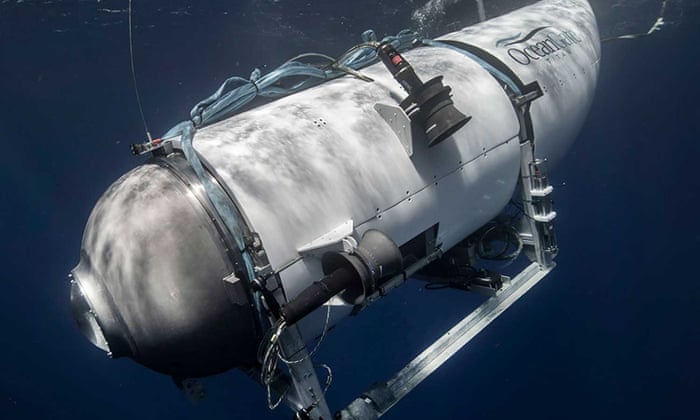
Titan had lost contact during its descent to the Titanic wreck. The early television reports described a rescue operation and the limited air supply aboard. Five people were on board, and families were waiting for news.
The distinction between what rescuers knew then and what investigators established later matters. An air-supply estimate was a contingency if the vessel remained intact; it was not evidence that the occupants survived the loss of contact.
22 June 2023
The discovery ended the hope of rescue
The search found wreckage on the seabed near the Titanic. Canada’s investigation summary records that the US Coast Guard confirmed the discovery on 22 June and that there were no survivors.
The task then changed from locating a missing vessel to understanding why its pressure hull had failed. That required recovered material, dive records and engineering analysis, not speculation about how much time remained on a clock.
15 October 2025
The US findings identified a damaged hull and inadequate engineering
The Coast Guard’s Marine Board released its investigation report in August 2025. In October, the National Transportation Safety Board’s findings set out a detailed engineering explanation. The NTSB attributed the probable cause to OceanGate’s inadequate engineering process and operation of a damaged composite pressure vessel.
Its account describes delamination—separation within the material’s layers—and further damage of unknown origin. It also found that the company’s analysis of the monitoring data failed to identify the need to take the vessel out of service.
The NTSB recommended a study of human-occupied pressure vessels, better tailored US rules and work toward consistent international requirements. Those were safety recommendations, not a declaration that replacement rules had already taken effect.
US Coast Guard · Marine Board report release · 5 August 2025 · NTSB · hull failure and investigation findings · NTSB · recommendations issued · 15 October 2025
8 April 2026
Canada spelled out the requirements for future dives
Transport Canada issued a bulletin clarifying existing construction, certification and operating requirements for passenger submersibles in Canadian waters. It set out a pre-dive report 96 hours ahead, followed by calls at the start and completion of the dive.
It also warned that Canada’s response capability for civilian subsurface incidents is extremely limited and becomes harder with depth. The bulletin should not be read as a promise that a deep-ocean rescue service is waiting nearby.
This was a statement of requirements and oversight arrangements within its stated scope, rather than new worldwide legislation or proof that every recommendation had been implemented.
Transport Canada · passenger-submersible requirements · 8 April 2026
17 June 2026
The Canadian report showed why oversight still mattered
Canada’s Transportation Safety Board released its own findings and six recommendations. Its investigation identified progressive hull failure and weaknesses in how risk was assessed and monitored. It also examined the gaps between the organisations that encountered the operation and those responsible for oversight.
The board called for stronger risk-based oversight, better information sharing, mandatory standards for human-occupied submersibles and clearer coordination when different groups work aboard a support vessel.
Importantly, it described the April bulletin and existing policy as steps in the right direction, while questioning whether they would be enough to prevent a similar operation escaping mandatory oversight. Its role is transportation safety; the report does not decide civil or criminal liability.
TSB Canada · investigation executive summary · 17 June 2026 · TSB Canada · investigation record and safety mandate
The evidence
Sources for this update
- 01ITV News · original search report · 19 June 2023
- 02US Coast Guard · Marine Board report release · 5 August 2025
- 03NTSB · hull failure and investigation findings
- 04Transport Canada · passenger-submersible requirements · 8 April 2026
- 05TSB Canada · investigation executive summary · 17 June 2026
- 06TSB Canada · investigation record and safety mandate
- 07CBC · Canadian findings · 17 June 2026
- 08Global News · Canadian report · 17 June 2026
- 09NTSB · recommendations issued · 15 October 2025
Where the story stands
Where the story stands
The investigations explain the loss of Titan. The remaining question is the adoption and practical enforcement of safeguards for future operations. Clearer guidance is not the same as mandatory oversight being in place. Research checked 25 October 2026.