
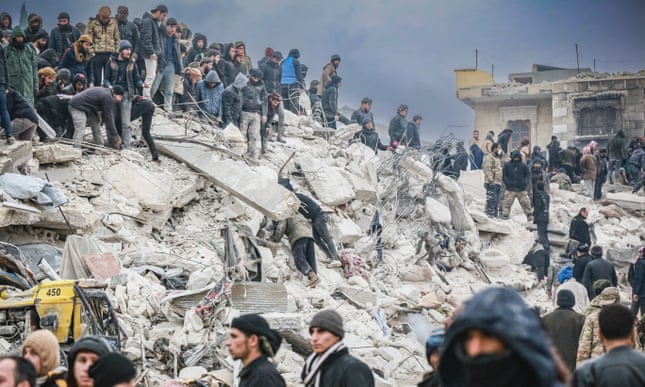


9 February 2023
Rescue gave way to the work of living
DEC launched its Turkey-Syria appeal on 9 February. Its programme timeline separates the first six months of emergency relief from the later recovery phase.
A tent, clean water or medical treatment could meet an urgent need without replacing a lost home or income. The next stage therefore involved more than moving rubble: people had to make everyday life work again.
6 February 2025
Two years later, temporary housing was still part of life
An Associated Press report published by PBS described survivors in Turkey still living in container accommodation two years after the earthquakes. It also followed a woman who had reopened her small business with support.
Those experiences belong to February 2025, not a fresh count of everyone still displaced today. They show why reconstruction cannot be measured only by a building announcement: an address, an income and the ability to manage daily costs are different parts of recovery.
Associated Press via PBS · survivors two years later · 6 February 2025
January 2026
The final report recorded repairs, not a finished recovery
DEC’s January 2026 final report covers programmes running through July 2025. In Syria, it records one member charity rehabilitating 370 earthquake-affected houses or apartments. In Turkey, its reported work included grants and practical support for businesses, farmers and cooperatives.
These are programme-specific results, attributed to the organisation reporting them. They are not a count of every repaired home across either country. The report’s ending closes that funded response; the wider task of rebuilding homes and livelihoods is a different question.
30 June 2026
More housing finance was approved. Families still needed homes.
The World Bank approved an additional €250 million loan for Turkey’s earthquake recovery project on 30 June 2026. With €150 million in French development-agency co-financing, the package was intended to support 3,000 additional rural homes.
The Bank explicitly described households still waiting for permanent housing. The new financing was an approval for further construction, not confirmation that those 3,000 homes were complete. It strengthens the evidence for an unfinished recovery in Turkey; it supplies no equivalent nationwide completion measure for Syria.
World Bank · additional earthquake recovery financing · 30 June 2026
The evidence
Sources for this update
Where the story stands
One programme can finish while families are still rebuilding.
The evidence shows practical assistance and a recovery that remained incomplete. A closed appeal is an administrative endpoint; a financing approval is a commitment to further work. Neither alone establishes that all earthquake survivors have secure housing or restored livelihoods. This follow-up remains open for verified implementation results in both countries.