


13 June 2025
The attacks made nuclear sites part of the war
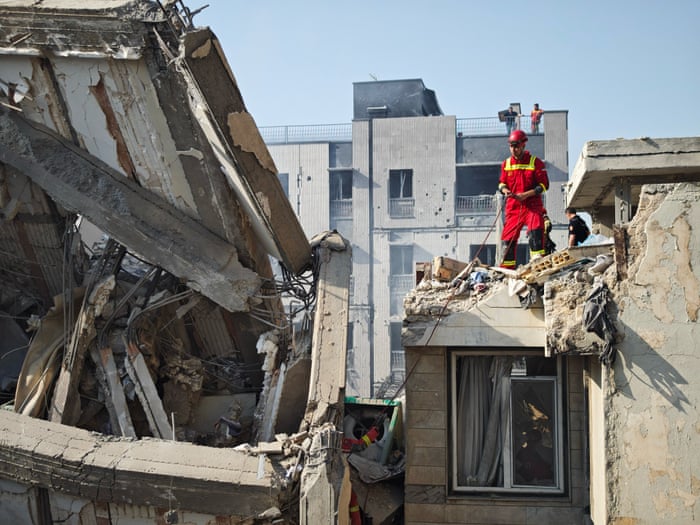
Israel launched attacks on Iran, including its nuclear programme, and Iran retaliated. The original reports captured a fast-moving escalation, with military claims and the condition of nuclear facilities still being assessed.
That is the starting point for this follow-up: did the fighting end, and did the attack on the nuclear programme resolve the dispute over it? A military claim about damage and an inspector’s verified account of nuclear material answer different questions.
24 June 2025
The ceasefire ended that round of fighting
The UN Secretary-General welcomed the announced ceasefire between Israel and Iran and urged both countries to respect it. That marked a concrete change after the June fighting, rather than a settlement of every issue behind it.
The distinction matters now because a headline about a ceasefire can remain true of that moment while becoming misleading as a description of the whole aftermath. Nuclear access, diplomacy and the possibility of renewed force had not been settled by the announcement.
United Nations · ceasefire announcement response · 24 June 2025
3 September 2025
Damage and verification became separate problems
The IAEA’s September report set out the interruption to its work following the June attacks. Inspectors had lost continuity of knowledge about nuclear material at affected facilities. That describes a break in verified information, rather than proof of a particular undisclosed activity.
A damaged facility is not the same thing as a complete, independently checked inventory. The location, quantity and condition of nuclear material still require access and accounting. Satellite images and political assurances cannot simply substitute for the safeguards process.
28 February 2026
The 2025 ceasefire was not the end of the wider conflict
In February 2026, the UN Secretary-General condemned new US and Israeli military action against Iran and Iran’s subsequent retaliation across the region. He called for hostilities to cease and for a return to negotiations.
The renewed escalation is a material part of what happened after the twelve-day war. It prevents this account from presenting June 2025 as a lasting peace. This timeline follows the conflict’s nuclear-verification thread; it does not turn disputed battlefield claims or changing casualty totals into settled facts.
UN Secretary-General · renewed military escalation · 28 February 2026
24 June 2026
An interim deal left inspections disputed
The Associated Press reported an interim US–Iran agreement, with a 60-day period to resolve details. Yet its account showed a dispute over inspection access: Grossi said visits would follow, while an Iranian diplomat said they required a final agreement.
The existence of an interim document therefore did not establish that inspectors had returned to the affected enrichment sites. Public statements described different expectations about what would happen next.
9 September 2026
The dispute returned to the UN’s governing bodies
The IAEA Board adopted a resolution calling on Iran to remedy its safeguards non-compliance. It requested that the resolution and associated reports be sent to the Security Council and General Assembly, while also supporting a diplomatic solution.
That is an institutional action, not a finding that Iran had assembled a nuclear weapon and not an agreement granting inspectors restored access. Arms Control Today’s October account reported that Iran contested the move and linked safe access and renewed verification to a broader diplomatic arrangement.
The original question therefore remained unresolved in a practical sense: an agency cannot supply the necessary assurances merely because a resolution asks for them.
IAEA · Board resolution GOV/2026/61 · 9 September 2026 · Arms Control Today · safeguards dispute and Iranian response · October 2026
23 October 2026
The agency said it was ready; an agreement was still needed
Speaking to the UN General Assembly, IAEA chief Rafael Grossi said the agency had completed most of the technical preparations needed to verify Iran’s nuclear activities, according to Anadolu’s report of his remarks. He stressed the need for a diplomatic agreement and independent verification.
Readiness is consequential, but it is not the same as inspectors having gained the access necessary to complete their work. The remarks did not establish that all affected sites had been inspected, that the material had been accounted for or that the wider war had ended.
For this story, the next meaningful milestone is an implemented arrangement that allows verification, or another substantiated development that changes that prospect. A further promise of talks would need to be described as a promise.
Anadolu · Grossi’s General Assembly remarks · 23 October 2026 · Associated Press · nuclear agency and General Assembly · 23 October 2026
The evidence
Sources for this update
- 01ITV News · original attack report · 13 June 2025
- 02United Nations · ceasefire announcement response · 24 June 2025
- 03IAEA · verification report · 3 September 2025
- 04UN Secretary-General · renewed military escalation · 28 February 2026
- 05IAEA · Board resolution GOV/2026/61 · 9 September 2026
- 06Arms Control Today · safeguards dispute and Iranian response · October 2026
- 07Anadolu · Grossi’s General Assembly remarks · 23 October 2026
- 08Associated Press · inspection dispute · 24 June 2026
- 09Associated Press · nuclear agency and General Assembly · 23 October 2026
Where the story stands
Where the story stands
What remains pending is an implemented diplomatic and verification arrangement, alongside the wider conflict’s course. Reported technical readiness is not a substitute for that outcome. Research checked 25 October 2026.