


9 April 2025
The announced rates changed within a week
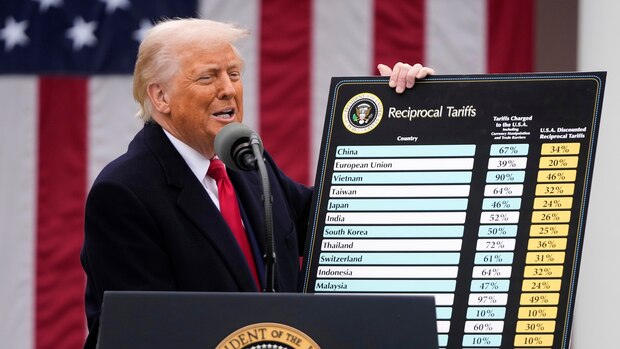
Trump paused most of the higher country-specific rates for 90 days, effective from 10 April. The 10% additional baseline remained, subject to the order’s exceptions; China was excluded from the pause and faced a further increase.
The original tariff chart was therefore a starting point, not a permanent schedule. Businesses faced changing rates while the legal challenge concerned whether the emergency law authorised these duties at all. That challenge eventually produced a much larger reversal.
20 February 2026
The legal foundation did not survive the Supreme Court
The court held that the International Emergency Economic Powers Act—IEEPA—did not authorise the president to impose tariffs. That was the law used for the April 2025 reciprocal programme and other emergency tariffs.
This was a decision about the power granted by a particular statute. It did not abolish tariffs as a policy tool or automatically invalidate duties imposed under every other trade law. That is why “the tariffs were struck down” needs an explanation of which tariffs. For the April announcement, however, the decision removed the claimed legal foundation.
Supreme Court · Learning Resources v Trump, 20 February 2026 · CBP · Response to the Supreme Court judgment
4 March 2026
Winning in court was not the same as getting the money back
The Court of International Trade then ordered Customs to process affected entries without the IEEPA duties. Some orders dealt with entries not yet finalised; the treatment of older, finalised entries became a further issue.
Customs needed a way to process the claims at scale. Its October Federal Register notice put the original workload at an estimated US$166 billion in IEEPA duties and more than 53 million entry summaries. That is a measure of duties assessed and entries to process, not the amount already refunded. The figures cover the wider IEEPA tariff actions, not only the April reciprocal announcement.
CBP · The refund system and its first phase, 13 April 2026 · CBP / Federal Register · The refund workload, 5 October 2026
20 April 2026
A refund system opened
Customs launched CAPE, a function inside its existing import-processing portal, to consolidate eligible refund requests and interest calculations. Importers of record or their authorised brokers could use it.
The agency’s May guidance distinguished a claim sent to Treasury from a refund actually issued. Those stages are easy to blur in a headline. A processed application, a certified sum and money arriving in a bank account are not the same event. The system also had eligibility limits, so its launch did not resolve every importer’s position.
CBP · The refund system and its first phase, 13 April 2026 · CBP · Tracking refunds, 4 May 2026
6 October 2026
The process reached some older claims
The next expansion covered certain finally liquidated entries—customs entries whose duty calculations had already become final. Supply Chain Dive reported that the new phase initially served litigating importers with the relevant court orders and importer details submitted by 30 July.
Its account of the 6 October filing said about US$126 billion had been sent to Treasury for disbursement as of 2 October. This account retains that wording: it is not evidence that every dollar had reached a business, still less that consumers had received refunds. Access to the expanded process remained narrower than every company affected by the original tariffs.
Supply Chain Dive · The expanded refund process, 8 October 2026 · Steptoe · What the October ruling does and does not decide, 13 October 2026
8 October 2026
A new class action opened another route
In Freestyle World, the Court of International Trade certified a class of importers seeking relief over the unlawful IEEPA duties. The ruling allowed the claim to proceed collectively.
Class certification is a procedural decision about who can bring a case together. It is not a final award of a particular refund to every class member. Steptoe’s 13 October analysis said the court had not yet made the substantive ruling that would extend relief to those non-litigant class members, while a related government appeal remained pending. Those are concrete unresolved questions in the aftermath of the original announcement.
Court of International Trade · Freestyle World class certification, 8 October 2026 · Steptoe · What the October ruling does and does not decide, 13 October 2026
The evidence
Sources for this update
- 01Supreme Court · Learning Resources v Trump, 20 February 2026
- 02CBP · Response to the Supreme Court judgment
- 03CBP · The refund system and its first phase, 13 April 2026
- 04CBP · Tracking refunds, 4 May 2026
- 05CBP / Federal Register · The refund workload, 5 October 2026
- 06Court of International Trade · Freestyle World class certification, 8 October 2026
- 07Supply Chain Dive · The expanded refund process, 8 October 2026
- 08Steptoe · What the October ruling does and does not decide, 13 October 2026
- 09White House · Executive Order 14266, 9 April 2025
Where the story stands
What has changed—and what still needs an answer
The legal answer on IEEPA is established. The financial aftermath is still unfolding: the scope of relief for importers outside individual lawsuits and the completion of refunds remain central. The next meaningful developments are substantive court decisions and implemented refund access, not merely a new estimate of claims submitted. This account does not imply that all other US tariffs ended or that consumers are entitled to direct repayment.